
Cost of Concrete Fencing Somalia: Why Mogadishu Developers Are Choosing Reinforced Precast Posts in 2026
For many years, traditional brick wall construction was the common choice for perimeter security in Mogadishu. It was familiar, available, and easy to build with local labor.
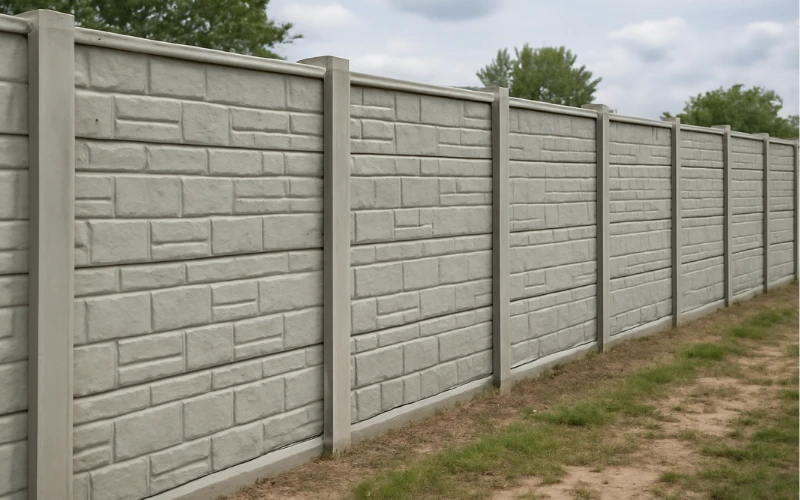
In Mogadishu, a boundary wall is more than a property line. It protects land, improves privacy, strengthens security, and gives property owners peace of mind. Whether you own a villa, warehouse, school, business site, compound, or development plot, a strong perimeter helps protect your investment from theft, squatters, damage, and costly repairs.
But in Mogadishu’s coastal districts, traditional brick walls are under pressure. The Indian Ocean salt air, heat, humidity, weak sand base, and shifting soil conditions can weaken ordinary masonry over time. Many property owners have seen brick walls crack, lean, fade, or show structural fatigue earlier than expected.
That is why developers are asking a smarter question: what is the real cost of concrete fencing Somalia property owners should budget for in 2026?
The answer is not only about price per meter. It is about durability, installation speed, reinforced posts, soil stability, security, maintenance, and long-term value.
Key Takeaways
The cost of concrete fencing Somalia depends on wall length, height, concrete grade, ground conditions, reinforced posts, professional installation, transport, and VAT.
In Mogadishu, reinforced precast posts and columns — Tiirarka shubka ah — are the most important structural part of a concrete fence.
C30 concrete may be suitable for standard fencing, while C40 reinforced precast posts and columns provide stronger performance for coastal, commercial, and high-security sites.
Weak sand base, nearby wells, and underground water movement can cause buildings, walls, and perimeter structures to sink, lean, or crack over time.
Precast concrete fencing is faster to install than traditional brick wall construction and can reduce long-term maintenance costs.
Why Traditional Brick Walls Are Losing Ground in Mogadishu
For many years, traditional brick wall construction was the common choice for perimeter security in Mogadishu. It was familiar, available, and easy to build with local labor.
However, Mogadishu’s environment is tough on ordinary brick and mortar.
In coastal areas, the Indian Ocean salt air can speed up deterioration. Moisture can enter weak joints. Heat can expand and contract materials. Poor foundations can shift. Over time, this leads to cracks, leaning sections, and repeated repair work.
A brick wall may look cheaper at the beginning, but the long-term cost can be higher when you include repairs, repainting, labor delays, structural cracks, and possible rebuilding.
For developers, time is also money. Waiting weeks for masonry work can leave land exposed and vulnerable. In a fast-growing city like Mogadishu, an open plot can quickly become a security risk. Property owners need a fencing system that is strong, fast, and reliable.
The Rise of Precast Concrete Fencing in Somalia
Modern precast concrete fencing is changing how property owners protect land in Mogadishu.
Instead of building every section block by block on-site, precast fencing uses ready-made concrete components produced in a controlled environment. These components are transported to the property and installed with reinforced precast posts and columns.
The biggest advantage is speed. Ready-to-install sections can reduce construction time compared with traditional brick wall construction. This means your property becomes secure faster, with less disruption, less labor, and fewer delays.
But the main strength of the system does not come from the horizontal sections. It comes from the posts.
The reinforced precast posts and columns — Tiirarka shubka ah — are the backbone of the fence. They hold the horizontal sections in place, transfer loads into the ground, and help keep the wall stable over time.
Why Reinforced C30/C40 Precast Posts and Columns Matter
Not all concrete fencing systems are built the same. One of the most important parts of a strong perimeter wall is the quality of the reinforced precast posts and columns — Tiirarka shubka ah.
In a precast fencing system, the horizontal sections close the space between each post. But the posts and columns carry the real structural responsibility. They support the fence, resist movement, hold the sections upright, and help prevent leaning, cracking, or collapse.
This is especially important in Mogadishu’s coastal districts, where salt air, heat, moisture, weak sand base, and shifting soil conditions can put pressure on any boundary wall.
C30 concrete can be suitable for many standard fencing applications when properly reinforced and professionally installed. However, for coastal areas, warehouses, schools, compounds, commercial sites, and high-security properties, C40 reinforced precast posts and columns offer higher strength and better long-term performance.
If the posts are weak, poorly reinforced, or installed with shallow foundations, the fence may begin to lean or crack even if the horizontal sections remain intact. That is why strong posts matter so much.
When comparing the cost of concrete fencing Somalia property owners should budget for, it is important to look beyond the visible wall. Ask about concrete grade, steel reinforcement, post depth, foundation preparation, and installation method.
A cheaper fence with weak posts may save money at first, but it can become expensive later through repairs, leaning sections, sinking, or full replacement.
What Affects the Cost of Concrete Fencing Somalia in 2026?
The cost of concrete fencing Somalia developers should expect in 2026 depends on several key factors.
The first is property size. A larger plot requires more fencing sections, more reinforced precast posts, and more installation work.
The second is wall height. Higher walls are often needed for villas, warehouses, schools, compounds, commercial properties, and high-security locations.
The third is concrete grade. C30 may be suitable for standard projects, while C40 reinforced precast posts and columns may be better for areas requiring extra strength and durability.
The fourth is ground condition. Mogadishu’s soil conditions vary by district. Some areas have stronger ground, while others have loose sand, weak base layers, or groundwater concerns.
The fifth is installation quality. Even the strongest Tiirarka shubka ah will not perform well if they are installed poorly. Proper post spacing, foundation depth, alignment, reinforcement, and ground preparation all affect the final strength of the fence.
Finally, property owners should include the 5% VAT on materials when preparing their budget. A proper quotation should clearly show materials, posts, installation, transport, VAT, and any additional foundation work required.
Weak Sand Base, Wells, and Why Mogadishu Structures Can Sink Over Time
One of the most important issues affecting concrete fencing in Mogadishu is the ground beneath the wall.
In many parts of the city, the soil can be sandy, loose, and vulnerable to movement. A weak sand base can reduce the stability of buildings, boundary walls, and other structures, especially when foundations are shallow or poorly compacted.
Mogadishu also has many wells and areas where underground water movement can affect soil strength. Over time, this can contribute to settlement. Settlement happens when the ground slowly compresses, shifts, or loses strength. When this occurs, walls and buildings may begin to sink, crack, lean, or separate at the joints.
This is one reason traditional brick walls often struggle in Mogadishu. Brick walls are heavy and rigid. If the ground below them moves unevenly, cracks can appear quickly. Once cracking begins, salt air, heat, and moisture can make the damage worse.
A well-designed precast concrete fencing system can reduce this risk when it uses properly reinforced posts, deeper foundations, and good ground preparation. The reinforced precast posts and columns — Tiirarka shubka ah — help transfer loads into the ground and maintain perimeter stability.
Before installing concrete fencing, property owners should consider soil conditions, drainage, nearby wells, and the strength of the sand base. In areas with weak or shifting ground, investing in stronger foundations is not an unnecessary extra cost. It is protection against future repair bills.
For Mogadishu developers, the cheapest wall is not always the most affordable wall. A properly engineered concrete fencing system using reinforced C30/C40 posts, strong foundations, and locally engineered materials can help reduce the risk of sinking, cracking, leaning, and long-term structural failure.
Professional Installation: Where Strength Becomes Security
A concrete fence is only as strong as the system supporting it. Reinforced precast posts are essential, but they must be installed correctly.
The strength of the wall depends on several details: concrete grade, steel reinforcement, post spacing, foundation depth, soil preparation, and alignment. If any of these are ignored, the fence can weaken over time.
This is where professional installation becomes critical. Correct foundation depth, firm compaction, proper spacing, and accurate placement help the wall remain stable for years.
For properties in Mogadishu’s sandy or coastal districts, reinforced posts are not just a support feature. They are the main structural element of the wall.
Faster Installation, Lower Disruption
One of the biggest advantages of precast concrete fencing is speed.
Traditional brick wall construction often requires large crews, cement mixing, sand, water, curing time, and constant supervision. Weather, labor delays, and material shortages can slow the project.
Precast fencing is more organized. Because the main sections and posts are prepared in advance, installation can move quickly once the site is ready.
For developers, this means faster protection. For landowners, it means less time worrying about trespassers or squatters. For businesses, it means less disruption and better control over project timelines.
A faster installation can also reduce labor costs, site supervision costs, and security risks.
Maintenance-Free Security for Mogadishu Properties
Security should not require constant maintenance.
A well-engineered concrete fencing system provides a strong, clean, and durable boundary that needs less upkeep than traditional brick walls. For homeowners, that means fewer repairs. For developers, it means better long-term value. For commercial sites, it means a stronger perimeter with less interruption.
In Mogadishu, where land values continue to rise and property protection is a serious concern, investing in a maintenance-free boundary is a strategic decision.
The right fencing system protects more than the edge of a property. It protects the investment inside it.
Locally Engineered for Mogadishu’s Conditions
Imported ideas do not always solve local problems. Mogadishu has its own climate, soil conditions, security requirements, drainage issues, coastal exposure, and construction realities.
That is why locally engineered materials matter.
Concrete fencing designed for Somalia should account for the Indian Ocean salt air, weak sand base, nearby wells, local transport, installation methods, and the security expectations of property owners.
Strong Tiirarka shubka ah, proper reinforcement, suitable concrete grades, and professional installation all help create a fencing system that performs well in local conditions.
When materials are designed and installed with Mogadishu in mind, the result is a stronger and more reliable perimeter solution.
Final Thoughts: Think Beyond the Initial Price
When comparing the cost of concrete fencing Somalia property owners are budgeting for in 2026, it is important to look beyond the first invoice.
Traditional brick walls may appear affordable at the beginning, but repairs, delays, salt-air damage, weak foundations, sinking, cracking, and maintenance can increase the real cost over time.
By contrast, a precast concrete fencing system built with reinforced C30/C40 precast posts and columns — Tiirarka shubka ah — offers a stronger and more reliable solution for Mogadishu properties.
The horizontal sections are important, but the posts give the wall its strength. They hold the fence together, support the structure, and help protect against movement, leaning, and long-term failure.
For developers, investors, businesses, and landowners who want security without constant maintenance, reinforced precast concrete fencing is becoming the smarter choice.
A strong perimeter protects more than land. It protects your investment, your timeline, and your peace of mind.