
Precast Concrete for Residential Buildings in Somalia: A Practical Response to Housing Quality, Speed and Affordability
Precast by New Mogadishu Company
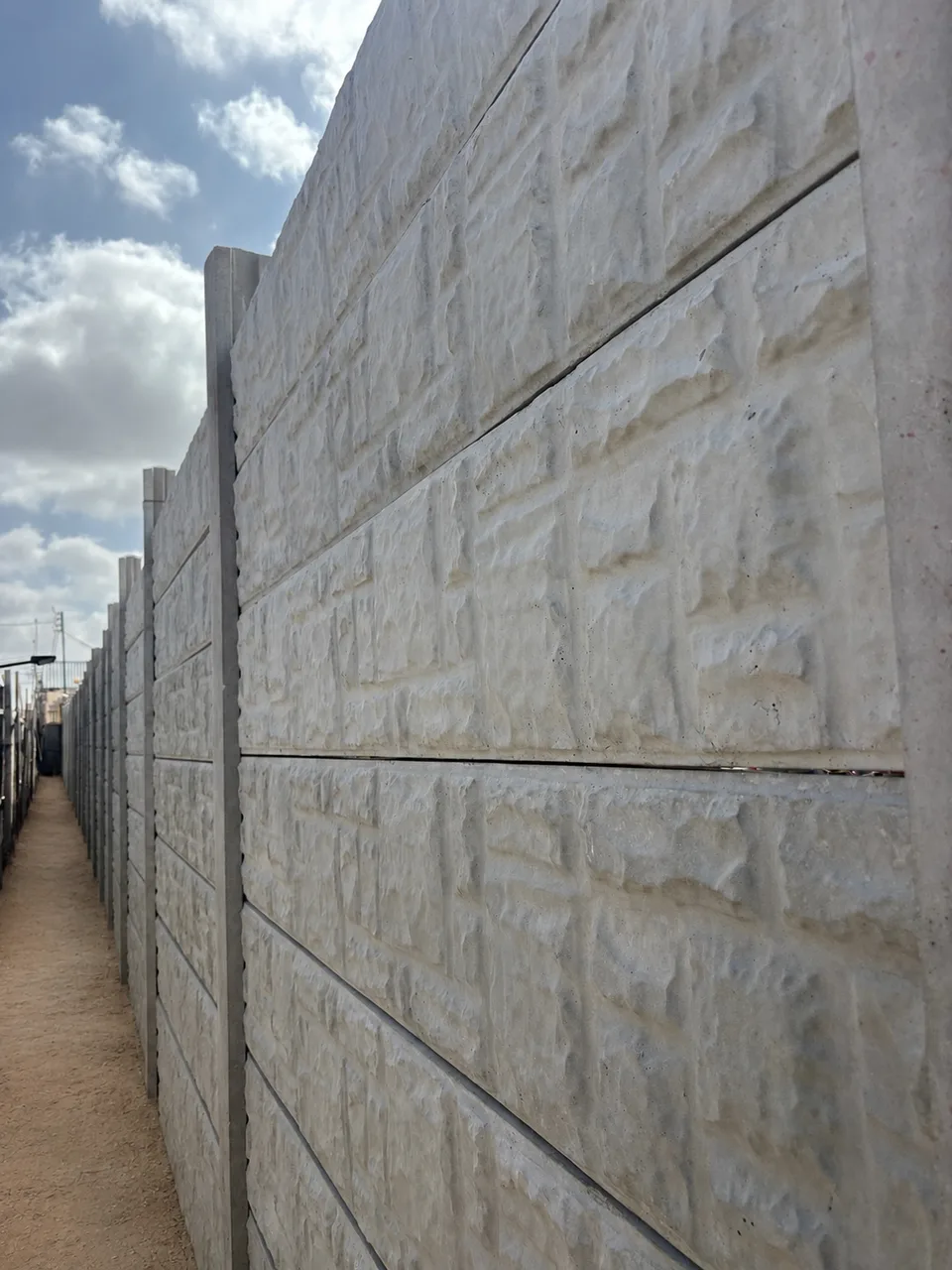
Somalia’s housing challenge is one of the most urgent development issues facing the country. It is not only a shortage of houses; it is also a shortage of safe, durable, affordable and well-planned homes. Rapid urbanisation, displacement, climate shocks, rising construction costs, weak regulation and limited housing finance have combined to create a difficult environment for both public and private housing delivery.
In this context, precast concrete offers a practical construction method that could help Somalia improve the quality, speed and affordability of residential buildings. Precast concrete is not a complete solution to the housing crisis. Land tenure, planning, finance, infrastructure and governance remain essential. However, as a construction system, it can directly respond to several problems that affect Somalia’s housing sector.
What precast concrete means
Precast concrete is a method of construction where concrete elements are manufactured away from the final building site, usually in a factory or controlled production yard. These elements are then transported to site and installed as part of the building.
In residential construction, precast elements can include wall panels, floor slabs, beams, columns, staircases, balconies, boundary walls, roof units, façade panels, drainage channels and paving units. Instead of casting every structural element manually on site, major parts of the building are produced in advance under controlled conditions.
This method is especially useful where housing designs are repeated. Apartment blocks, affordable housing estates, planned settlements and low-rise housing schemes often use similar room sizes, wall layouts, stairs and floor systems. Precast construction benefits from this repetition because the same moulds and production methods can be used many times, reducing waste and improving consistency.
Somalia’s housing problem
Somalia’s population is growing quickly, and a large share of that growth is taking place in urban areas. Cities such as Mogadishu, Baidoa, Kismayo, Garowe and Hargeisa are under increasing pressure from population growth, rural-to-urban migration and displacement caused by conflict, drought and flooding.
A large proportion of Somalia’s urban population lives in slum-like conditions, often in makeshift shelters with limited protection from heat, rain, fire and insecurity. Many internally displaced families live in temporary shelters made from light materials such as sticks, fabric, plastic sheeting and thatch. These shelters may provide immediate protection, but they are not suitable as long-term homes.
The housing deficit is therefore both quantitative and qualitative. Somalia needs more homes, but it also needs homes that are safer, stronger, healthier and more affordable to maintain. Traditional construction methods have not been able to meet this demand at the required scale or speed.
Construction quality and weak regulation
One of the main challenges in Somalia’s construction sector is inconsistent quality. Many buildings are constructed according to contractor experience, client budget and available materials rather than clear national standards. The lack of a unified building code and limited enforcement capacity creates risks for safety, durability and long-term performance.
Poor construction quality often appears in the form of weak concrete, poor reinforcement placement, uneven walls, cracks, water leakage, poor curing and inadequate structural connections. These problems increase maintenance costs and can create serious safety risks, especially in multi-storey buildings.
Precast concrete can help address this issue because production takes place in a controlled environment. Concrete mixes can be tested, moulds can be reused accurately, reinforcement can be checked before casting, and elements can be inspected before being delivered to site. This reduces the variation that often occurs in site-based construction.
For Somalia, this quality control advantage is highly relevant. If precast production is linked to proper engineering standards, testing procedures and inspection systems, it can help create a more reliable housing supply. The same wall panel, slab or staircase can be produced repeatedly with known strength, dimensions and finish. This makes quality easier to monitor than on many scattered construction sites.
Speed of delivery
Somalia’s urban housing demand is increasing faster than formal housing supply. When housing delivery is slow, informal settlements expand, rents rise and low-income families remain in unsafe living conditions for longer periods.
Precast concrete can reduce construction time because production and site preparation can take place at the same time. While foundations, roads, drainage and services are being prepared on site, wall panels, floor slabs and staircases can be manufactured elsewhere. Once the site is ready, the components can be transported and assembled quickly.
This is an important advantage for affordable housing. Faster delivery can reduce financing costs, shorten project delays and allow families to move into permanent homes sooner. In areas affected by displacement or climate-related damage, speed is not only an economic benefit; it is also a social and humanitarian benefit.
For Somalia, precast could be particularly useful in planned residential schemes, public housing projects, apartment blocks, resettlement areas and worker housing. Where designs are standardised and repeated, construction time can be reduced significantly compared with fully traditional site-built methods.
Affordability and cost control
Housing affordability in Somalia is affected by several factors, including low household incomes, limited mortgage access, high land costs, imported materials and construction delays. Many households cannot afford formal housing, while developers often focus on higher-income groups because low-income projects carry financial risk.
Precast concrete can support affordability by improving cost control. Factory production allows more accurate material measurement, less waste, fewer site errors and reduced rework. Standardised components also make budgeting easier, especially for large housing programmes.
The upfront cost of establishing precast production can be high. It requires moulds, equipment, trained workers, storage space, transport and lifting systems. However, when used at scale, the cost per unit can fall. This makes precast most suitable for repeated housing programmes rather than one-off individual houses.
For low-income housing, the main affordability benefit is not simply the initial construction price. The larger benefit is life-cycle affordability. Durable homes require fewer repairs, better-quality finishes reduce maintenance, and stronger structures last longer. A cheap house that cracks, leaks or fails after a few years is not truly affordable. Precast construction can help produce homes that are affordable to build and affordable to live in over time.
Reducing dependence on inconsistent site labour
Somalia’s construction sector depends heavily on manual site labour. Skilled workers are available, but the quality of workmanship can vary widely between projects. Supervision is also inconsistent, especially on low-cost developments.
Precast changes the labour model. More work is moved into a production yard or factory, where workers can be trained to perform specific tasks repeatedly. This can improve productivity and create more specialised construction jobs. On site, the work becomes more focused on installation, alignment, connections and finishing.
This does not remove the need for skilled labour. In fact, precast requires good engineers, technicians, crane operators, welders, installers and quality inspectors. However, it creates a more organised system of construction. For Somalia, this could support the growth of a stronger local construction industry, with better training, safer working conditions and more predictable output.
Reducing material waste and improving local production
Somalia relies heavily on imported construction materials. Cement, steel, tiles, fittings and other building products are often affected by international prices, shipping costs and supply delays. This makes housing more expensive and exposes projects to price instability.
Precast concrete cannot eliminate the need for cement and steel, but it can use materials more efficiently. In factory conditions, concrete quantities can be better controlled, moulds can be reused, waste can be reduced and rejected work can be limited. Standardised production also allows better planning of material supply.
There is also an opportunity for local production. Somalia already has emerging precast activity in products such as wall panels, slabs, fencing, paving and other concrete elements. Expanding this capacity could create jobs, develop local expertise and reduce dependence on imported finished building systems.
A local precast industry would be more beneficial than simply importing prefabricated units. Local production can be adapted to Somali climate conditions, available materials, transport limits, labour skills and household needs. It can also support local businesses and create a construction supply chain that remains within the country.
Climate resilience and durability
Somalia is highly exposed to climate risks, including drought, flooding, heat stress, extreme rainfall and coastal hazards. Recent flooding has damaged and destroyed many homes, particularly those built from weak or temporary materials. Housing solutions must therefore be stronger and more climate-resilient.
Precast concrete can contribute to climate resilience when properly designed. Strong wall panels, raised floor systems, durable foundations and precast drainage channels can help reduce damage from flooding and heavy rain. Concrete is also resistant to fire, rot, insects and general weathering, making it more durable than many temporary shelter materials.
In hot climates, building design must also consider thermal comfort. Concrete has thermal mass, meaning it can absorb and release heat slowly. When combined with insulation, shading, ventilation and reflective roof design, precast concrete can help create more comfortable indoor environments. This is important in Somali cities where heat, humidity and limited access to mechanical cooling affect everyday living conditions.
Precast should not be used as a simple concrete box without climate-sensitive design. Proper orientation, roof ventilation, window placement, shading devices and insulation are still necessary. The best approach would combine precast structure with passive cooling principles suited to Somalia’s climate.
Suitability for low-income housing
Precast concrete is often associated with large commercial projects, but it can also be suitable for low-income housing when designed correctly. The key is simplicity. Low-income housing does not need over-complicated or expensive precast systems. It needs practical components that reduce cost, improve quality and speed up delivery.
Suitable components could include hollow-core floor slabs, simple wall panels, standard staircases, roof beams, boundary walls, drainage units and modular room elements. These can be used in low-rise housing, apartment blocks and settlement upgrading projects.
For low-income households, the benefits are clear. Stronger homes provide better safety. Faster construction reduces waiting time. Better quality reduces repair costs. Durable materials improve long-term value. If precast is combined with serviced land, affordable finance and good planning, it can support more inclusive housing delivery.
Challenges of using precast in Somalia
Precast construction also has limitations. It requires careful planning from the beginning of a project. Designs must be coordinated early because late changes can be expensive. Transport routes must be suitable for moving large concrete elements. Sites need space for unloading and installation. Cranes or lifting equipment may be required. Connections between elements must be properly engineered.
These challenges are manageable, but they cannot be ignored. Poorly designed or poorly installed precast can be dangerous. Somalia would need technical standards, trained professionals, inspection systems and quality certification for precast housing to succeed at scale.
The most realistic approach would be gradual. The sector could begin with simple and widely needed products such as slabs, staircases, walls, drainage channels and paving. As skills and confidence grow, more advanced residential systems could be introduced.
Conclusion
Precast concrete offers Somalia a practical way to improve residential construction. It responds directly to many of the country’s housing and construction challenges: poor-quality informal housing, slow delivery, high material waste, inconsistent workmanship, climate vulnerability and unaffordable maintenance costs.
It is not a stand-alone solution. Somalia still needs secure land systems, better urban planning, stronger building regulations, housing finance and infrastructure investment. However, within that wider framework, precast concrete can help create safer, faster and more affordable housing.
The strongest opportunity lies in developing local precast capacity suited to Somali conditions. Locally produced panels, slabs, staircases, drainage units and modular housing components could help transform the housing sector from fragmented site-based construction into a more organised and reliable system.
For a country facing rapid urban growth and a serious housing deficit, precast concrete should be seen as more than a construction technique. It is a potential tool for improving living standards, supporting local industry and delivering durable homes for families who need them most.